Tuesday, June 26, 2012

Review: L.A. Noire

Full Review:
L.A. Noire

"Leaping technological boundaries."


Developed by Team Bondi
Published by Rockstar Games
for the Xbox 360, Playstation 3
Released May 17th, 2011


After a 15 year run of developing and publishing exceptional video games that take us to crime infested cities, terrain, and even schools, Rockstar puts us in the role of the law and takes us to the dark and corrupt setting of 1940's Los Angeles. Not only does L.A. Noire offer a unique style of detective gameplay and gunplay, it also brings an interrogation arrangement seldom pulled off right in modern games. Perhaps the most intriguing aspect of L.A. Noire are the realistic facial expressions pulled off by the cutting edge Motion Scan technology. However, it all comes down to whether or not these mechanics are defined well enough to create a great gaming experience.

L.A. Noire tells the tale of World War II veteran, Cole Phelps, as he works up the ranks as a detective in the LAPD. In order to do so, the player must use a mixture of gunplay, detective work, chasing, and interrogating in order to solve every case and earn promotions (going from patrol to traffic to homicide, etc). All of these gameplay mechanics are blended perfectly as to not overly exhaust the fun out of one or another. So, hardcore players need not worry about spending hours just looking for clues as there is a fair share of gunfights to satisfy (or maybe pacify).

The biggest gripe I had with the gameplay was how much the game holds your hand throughout the cases. In car chases, if the car is too far ahead, it will actually slow down until you catch up to it, then the bandit will speed up. While searching for clues, there will always be text telling you that you should turn a watch a certain way to see a name engraved or press A to look behind a picture frame to read a message. The ability to skip action sequences and use intuition points (the ability to show where all hidden clues are on the map) would have been enough hand holding but changing A.I. to lower the difficulty is unnecessary.

The gunplay is taken straight from Red Dead Redemption (same engine, no duh). The biggest difference is that you cannot collect and upgrade your weapon. Rather you start off with a pistol and can pick up a variety of weapons that enemies drop. The player cannot, however, keep these weapons and use them on the next case. That's the major problem with the depth of the gunplay; it seems as if it only touches on the shooting and quickly switches to something else. The dodging, aiming and firing, however, are just as you remembered in Red Dead Redemption.

The clue collecting is straight forward; search an alleyway or a home, and walk Cole until you hear a chime to signify a clue is nearby. Pick up the clue and see how it will aide your case. You can use these clues to build up your case against interrogating a suspect. A suspect will respond to a question that Cole asks in their own way. It's up to the player to decide whether he is telling the truth or lying. In order to do this, the player must take notice of the facial expressions and body movements that the suspect does (nervouse twitches, worried expressions will always reveal a liar). There are three options; truth, doubt and lie. If a person is lying but you can't prove that he is, you doubt him. If he is lying, and you have hard evidence, you outright accuse him. You then have to search through all the evidence and choose the right one that corresponds to the response given. This is an amazing gameplay mechanic that intertwines unique gameplay with the Motion Scan technology in an almost flawless way.

The musical score fits the game perfectly. From chase scenes, to crime scenes, to interrogations, the music and chimes take the player to 1947 and keep them there until they are done playing. The radio plays classic 40's jazz and big band hits that'll keep your foot tapping whenever your patrolling the streets looking for gangsters to ruin their day.

The acting is phenomenal. I say acting because it's no longer just voice acting. L.A. Noire's technology brings the actor into the game itself. These actors bring the player an unparalleled emotion by using both voice and expression. Aaron Staton of Mad Men brings Cole Phelps to life. I didn't find any of the actors unbelievable in their delivering of the characters. It's all the reason why L.A. Noire is such a story telling power house.

The facial animations that Team Bondi and Rockstar have been promoting are gorgeous. It's amazing how the actors have to provide not only a voice but must react to real situations presented in the game. It is a real shame that the beauty of the faces really bring out the flaws of the body animations and environments that would have otherwised gone unnoticed. The body animations are puppet like and sometimes do not cooperate with facial animations. A lot of the environments' textures are bland or do not load properly during cutscenes while shadows are laughably pixelated. In any other game, these would be minor flaws but in a game where the facial animations are a definite step forward in graphical technology, it's a shame that everything else is somewhat lacking in quality.

The lack freedom of L.A. Noire is a definite setback compared to games like Red Dead and GTA. The player is able to select the option of simply exploring L.A., searching for badges, uncovering landmarks, and answering dispatch calls. Unfortunately, the player cannot make Cole go on a trigger happy happy rampage or even throw a few punches on unsuspecting civilians. The player cannot draw his weapon or fists while on duty (hell, Cole can't even run over pedestrians with their ninja-like reflexes). The player is left upholding the law with no other choice. (We want to at least HAVE the option to cap a few innocents, right?)

L.A. Noire is very story driven. In some aspects this is a good thing and in others this is not. Rockstar provided a riveting tale and intriguing cases taken from actual crimes that hold its own in entertaining the player even if the gameplay falls short at times. The story, being as appealing as it is, can take away the focus of the gameplay and aim it directly at the story. (i.e. skipping action sequences). It's evident that Rockstar wanted a unique gameplay experience and they definitely have one but with certain instances during the game it seems they wanted to rush the player out of brilliant action sequences so they can sit back and relax to watch the cutscenes. It's incredibly unfortunate that such brilliant gameplay and potential exploration was sacrificed at the cost of story which should never be the case for a video game. Other than these apparent flaws, L.A. Noire is an incredibly deep and unique experience that any gamer should at least try. The game, although lacking in replay value, definitely offers players an unforgettable experience even if you'll find yourself spending a significant amount of time watching rather than controlling.

RANK:  B

Fun:  3/5
Lasting Appeal:  2/3
Controls:  5/5
Graphics:  1/2
Sound:  2/2


Thursday, June 14, 2012

Review: Xenoblade Chronicles


Xenoblade Chronicles


The masterpiece that almost never was . .


Developed by Monolith Soft
Published by Nintendo
for the Wii
Released April 6, 2012


After the announcement of the Wii U at e3 2011, the Wii became a footnote in Nintendo's agenda with only The Legend of Zelda: Skyward Sword to look forward to in 2011 and absolutely nothing in 2012.  This made the story behind Xenoblade Chronicles' localization all the more gratifying.  Nintendo had no plans of bringing Xenoblade to North America which would have meant an absolute drought for Wii owners.  Fortunately, with the dedication of devoted fans through petitions and communities such as Operation Rainfall, Americans and Europeans finally have a chance to get their hands on one of the greatest JRPGs of all time.

The world that Xenogears/Xenosaga mastermind Tetsuya Takahashi created for Xenoblade is a grandiose and almost exaggerated take on science fiction story-telling.  You live on the eons-old corpse of a god that died fighting another god in a battle as old as time itself.  And that's just the backstory. The main story has you lead Shulk, the wielder of the Monado Blade, and his friends as they set off on a journey across the Bionis (the big dead god they live on) in order to destroy an army of living, talking mechs all while saving a princess from giant mind-reading birds called Telethia.  As insane as it sounds in summary, Xenoblade is actually full of endearing characters placed in a story enveloped in emotion and suspense.  It’s a story with intertwining twists and dilemmas that keeps the player captivated.

Being made solely for the Wii, Xenoblade looks great for a game developed on last-gen hardware. Textures and character models look horrendous even during cutscenes. Objects look bland and jagged while animations such as jumping look awkward. This game certainly does not lack in aesthetic beauty, just don’t expect to find much detail in anything up close.  The real beauty comes from the world and the environments themselves.  I have found myself staring in awe at the game’s natural ambiance blended with its beautiful colors and lighting effects.  Walking through Satorl Marsh at night or looking up at Eryth Sea from the Frontier Village gives a sense of appreciation for a world designed to balance and infuse life and nature into one living entity through its art style and music.

Xenoblade is one of those rare games that have a flawless soundtrack.  JRPG composing veterans Yoko Shimomura (Kingdom Hearts, Mario & Luigi) and Yasunori Matsuda (Xenogears, Chrono Trigger) lend their expertise to create another exquisite score.  Every area of the Bionis has a tune that changes to adapt to the day-to-night cycle, much like how the visuals change depending on the current time.  During the day, songs are livelier whereas night evokes a more solemn take.  It requires true mastery to fully comprehend an environment in order to create not one but two complimenting interpretations of a single composition.

There would be no point in creating such an immersive world if the developers thought you’d only be in it for ten or fifteen hours.  The creators knew that with the amount of quests, leveling, upgrades, and exploring they embedded into Xenoblade , players would easily reach the 80 hour mark. The combat alone has so much implemented that the game never stops introducing you to new battle concepts.

The combat gets its gameplay cues from MMOs and classic JRPGs.  The player battles enemies in real-time and can move the main character around the battlefield during combat.  The characters will auto-attack every few seconds but Arts can be deployed at any time from the player’s battle palette.  Your two partners will attack independently although I was surprised to see how well the A.I. follows your pattern of attack.  If you inflict Break on an opponent, they will follow up with Topple causing the foes to fall over.  The need for A.I. cues such as Gambits in Final Fantasy XII is rendered unnecessary when the A.I. performs this intelligently.  “Visions” will also stop the battle to show the player a powerful attack an enemy will use on a character in order to give the player enough time to defend themselves against it.  There’s nothing quite as satisfying as guarding against an ultra-powerful attack thus “changing the future”.  Classic RPG effects like buffs and debuffs remain, however, the ability to heal using items is not available, making all healing only possible through Arts or auto-healing after a battle.  All this makes combat addictive, fast-paced, and fluid.  The battles can become pretty intense with multiple or overpowered enemies all on the screen at once and although there can be slow-down at times, it in no way takes away from the overall gameplay.


Every character’s Arts can be leveled up to increase damage, effects, or decrease cool down time.  Every weapon or piece of clothing has the potential to hold gems which offer the player boosted attributes.  Gems can be crafted using crystals and cylinders in sort of a fun team-building minigame. Relationships between team members and NPCs can be improved by quests and battle cues which help in seeing special character development scenes called Heart-to-hearts.  With all this and the countless quests and collectibles not to mention the story, Xenoblade definitely offers a life-consuming experience.
 
The player must be warned; before you decide to pick up this incredible game, do yourself a favor and buy a Classic Controller Pro.  Playing with the Wiimote and Nunchuk will become frustrating in its odd button placing and camera adjusting and can ultimately put a damper on the flow of the game.  Playing with the Classic Pro offered no hindrances or problems and felt appropriate with Xenoblade’s combat style.

Without hesitation, I can place Xenoblade Chronicles on the same tier as JRPG classics like Final Fantasy VII and Chrono Trigger.  Xenoblade is the prime example of how a game can successfully evolve and reshape a genre all while staying true to devoted fans.  And to think, if it wasn't for these fans, everyone outside of Japan would be stowing away their Wiis instead of experiencing this gem.


RANK: A+


Fun:  5/5
Lasting Appeal:  3/3
Controls:  5/5
Graphics:  1/2
Sound:  2/2


Thursday, June 7, 2012

E3 2012 Recap


Wow, what a disappointing year for gaming.  E3 failed to impress by miles. 

Microsoft:

Microsoft opened up, of course, with Halo 4.  Master Chief is shown kicking the ass of some aliens that look an awful lot like creatures from Metroid Prime.  Halo 4 looks pretty fun with Cortana going crazy and all and it gives hope to a promising showcase from Microsoft . . .

BUT THEN NOTHING!

For the rest of the show they don’t present any more video games or at least video games to care about.  We did get some weird cryptic messages from PixelJunk and some 3D Angry Birds but other than that it was just Apps, Apps, Apps, turn your MS devices into a Wii U gamepad, Kinect, Kinect and of course Usher.  They literally “Ushered” in a golden age of gaming with a 15 minute dance off.

They did show Black Ops 2, but I honestly couldn’t care less about the Call of Duty franchise anymore.  It’s scary to think that Microsoft assumes that this is the path the video game industry should take.  Microsoft’s conference succeeded in proving that their first priority isn’t the games, it’s all of the peripherals and apps that they shoved down our throats for an hour.  It was an embarrassment and may God have mercy on their souls.

+Halo Prime
-apps
-Kinect
-1-minute pixeljunk trailer with nothing to go off
-Usher
Microsoft Grade:  D

EA:

Jesus Christ how horrifying, this moment was prophesized by the ancients.  The Doomsday is upon us. How could we let it get this far?  It is our doing, these are our sins.  We must repent.  God will come to reap the sinners.

Crysis 3 looked pretty cool, though

+Crysis 3
-sports
-DLC up the ass
-The Old Republic damage control (haha we all know that game is crap)
-nothing else
EA Grade:   F

Ubisoft:

Now Ubisoft knows how to throw a press conference.  If you ignore the awkward bantering from the host Aisha Tyler, you will be immersed in trailer after trailer, demo after demo of yes, ACTUAL GAMES!!!! 

Farcry 3 looks gorgeous and I’m not just talking about the boob groping.  Sure the gameplay isn’t too unique but the demo did prove that aesthetics and story can take a presentation a long way.  I loved the constant insane banter of the terrorist leader as the player killed hordes of his mercenaries.

Not being a huge fan of Splinter Cell, the demo for Black List impressed me.  It reminds me of a cross between Assassin’s Creed and Metal Gear Solid.  The trailer for Avengers: Battle for Earth showed off a fight between Wolverine & Venom, and Spider-man & Magneto.  Then you see the Avengers atop a building looking on as the Skrull invasion begins.  Awesome.

I was surprised that they had an entire section dedicated to the Wii U even before Nintendo’s conference had begun.  They showed off Rayman Legends which nicely incorporated the Gamepad.  The run through of the church level with that badass version of “Chasing A Dream” had me convinced that I was buying this game at launch.  While the trailer for ZombiU looked promising  it didn’t really do much for me.  It kind of looks like what Ubisoft tried to do with Red Steel for the Wii; showing off the gimmicks while ignoring gameplay.

The big trailer was Assassin’s Creed 3 which had Connor mess up some damn red coats in a beautiful trailer much like last year’s for Revelations.  The demo that followed showed off how AC3 is just like the rest in the series.  It’s not a bad thing it’s just there wasn’t too much that differentiated it from Altair or Ezio’s adventures except it’s in Murrikah now!

Then there was some MLG sort of deal  that I didn’t give a damn about.  But after that was the demo that everyone is still talking about.  Watch Dogs.  The trailer showed some guy using his cell phone to hack the city up!  He hacks the bouncers’ phones so he can sneak in a club then beats the crap out of another one with a baton.  After a bit, he hacks a street light causing a huge crash and a giant gunfight erupts.  He easily takes his targets out while a gas station explodes behind raining embers around the street.  Watch Dogs looks to blend stealth, action, puzzle solving, shooting, open world exploration in a way that made my mouth water.  Watch Dogs definitely takes the prize as biggest surprise of e3.

+Watch Dogs
+Splinter Cell
+Rayman Legends
+Wii U showcase
+Assassin’s Creed 3
+Left the sports and fitness stuff to a quick montage
+Avengers
-awkward host
-not a lot of surprises/most of it we’ve already heard about
 Ubisoft Grade: B

Sony:

Sony offered a mixed bag of goodies for their presentation.  Nothing mind blowing but hey at least they had games (or movies.)  Sony opened up with Quantic Dream’s Beyond, the successor to their 2010 hit Heavy Rain.  It stars Ellen Page as Jodie Holms, a young girl with psychic powers (or a ghost friend I'm not entirely sure).  The trailer was an interesting look into the game but unfortunately it did not show any gameplay whatsoever.  Nonetheless, I’m excited for it.

Sony then failed to impress with their demo of Sony All-Stars Battle Royale.  There was absolutely nothing new other than the reveal of Nathan Drake and Big Daddy.  As much of a fan as I am of the Super Smash Bros. series, I can’t seem to get myself excited for this title.  It just appears to be a blatant copy that lacks the charm of the Smash series and it’s going to take a lot more hype from Sony to get me interested in this game.

The gameplay for The Last of Us showed a lot of what the game is about; surviving in a dying world as you and your partner work together to keep on surviving to the next day.  The dialogue is plentiful and the action is perfectly balanced with moments of silence as you assess the conundrum of whether or not to enter a decaying hotel despite the dangers that lie in wait.  The demo succeeded in building hype and I’m actually looking forward to more news regarding it.

Then there were 15 minutes of Move story book nonsense that no one could seem to get to work just right.  The mediocre presentation ended with a demo of God of War Ascension which was underwhelming to say the least.  The demo showed off Kratos generically fighting off goat and elephant men in his usual fashion.  Now, God of War 3 started out with the epic punishment and brutal death of God of the Sea in one of the greatest video game intros of all time.  Then we go to him having trouble fighting a man sized elephant.  Yeah, my hype level has hit an all-time low.

+Beyond
+The Last of Us
-Sony Smash Bros.
-God of War Ascension failed to impress
-Move story book time!
-No news on how they will save the Vita from its inevitable death
Sony Grade:  C

Nintendo:

I’ll be honest, I was fan-boy levels of hyped going into Nintendo’s conference and the intro didn’t disappoint.  Miyamoto did an adorable skit about Pikmin and voila, they showed the first video of Pikmin 3!  The beautiful environments, those adorable Pikmin, that Wii U gamepad integration, it was all there.  Yes, Pikmin 3 quickly became the star of Nintendo’s conference especially since nothing else worthwhile showed up.

The only other good game they showed was New Super Mario Bros. U with its gorgeous backgrounds and familiar gameplay.  Unfortunately nothing new came to the show.  No surprises at all.   No Star Fox/Metroid crossover rumor.  No big first party titles to get everybody amped for the Wii U.  Nothing.  They even pushed aside the 3DS conference for the next day to show off the Wii U games but there was no point since they spent half the conference talking about how cool Nintendo Land will be and it is obviously not.  I don’t need a ten minute tutorial on how to play a mini-game.  I knew how to play in the first 20 seconds they showed it. Yet, they kept beating it into our brains as if they wanted so hard for us to like such a crappy concept.  No I didn’t like it so stop talking about it please.

Reggie then came onto the stage and said “Now let’s finish with . . .”  WITH WHAT?  A SURPRISE!?!?!?  YES PLEASE REGGIE!!!  “One more walk through the theme land that is Nintendo Land.”  And all it showed was fireworks.  Nothing else.  My heart sank.  I was devastated. I didn’t think I could look at Nintendo the same way again.  It was the MOST disappointing conference at e3. 

What boggles my mind is that they had an awesome third party game called Project P-100 which is an insane blend of Pikmin and Viewtiful Joe made by Platinum Games.  And they didn’t show it until after the conference!!!!  That would have fit perfectly in their hour of show time but I guess they couldn’t cut out a little Nintendo Land time for a game that could have possibly saved their presentation.

The Wii U comes out this holiday and yet Nintendo refuses to bring out their A-game.  I don’t understand it.  They have almost nothing to look forward to with the launch of the Wii U except for Pikmin 3, Rayman Legends, and New Super Mario Bros. U.  As much as I like Batman: Arkham City, I will NOT buy it again for the Wii U.  Everybody who is interested in the least bit in Arkham City or Mass Effect  3 have already bought it and played it.  Nintendo offered little to nothing to in these ports.  They didn’t even explain how Assassin’s Creed 3 or Darksiders 2 will be better on Wii U.  If the fans want the same game without buying a whole new console they’ll buy these games for the system they already have.  It’s a dangerous path Nintendo is taking and I just hope they can make it out on top in the end. 

+Pikmin 3
+Reggie’s body was ready
+New Super Mario Bros. U
+Wasn’t bad enough to deter me away from getting a Wii U
-Nintendo Land
-3DS pushed aside
-Didn’t explain how the ports will be better
-No surprises
-No Zelda/Metroid/Star Fox/ F-Zero/Donkey Kong or anything
-They don’t know what they hell they’re doing with the Wii U

Nintendo Grade:  C


Overall e3 Grade:  C

Tuesday, May 29, 2012

Review: Disney Epic Mickey

Full Review:
Disney Epic Mickey


Developed by Junction Point
Published by Disney Interactive Studios
for the Nintendo Wii
Released November 30th, 2010


Not the epic it hoped to be:
Never has the gaming community anticipated a Mickey Mouse game as much as they have with Disney Epic Mickey. As soon as gamers saw the cover of Game Informer over a year ago which displayed a darker style of Mickey Mouse, speculation and anticipation grew everywhere. Warren Spector and his Junction Point team promised to take Mickey Mouse into untraversed territory and turn Mickey into a video game star on the same par as Mario and Sonic. Epic Mickey brings a lot to the table but ultimately falls short in too many areas for it to be considered a classic.

The game starts out with a mischievous Mickey Mouse venturing through a magical mirror in his bedroom ultimately ending up in the workshop of wizard Yen Sid of Fantasia fame. There Yen Sid is putting the finishing touches on a land where forgotten Disney characters can live in peace created using a magical paint brush. After Yen Sid retires to his chambers, Mickey decided to add some of his own artistic touches to this wondrous world. Through his mischievous meandering with Yen Sid's brush he creates an evil entity known as the Blot and spills thinner all over the land sending the world into a spiral of disarray. Mickey escapes through the mirror leaving a blatantly obvious abyss where Yen Sid's new world once lied. Nearly a year later, Mickey is famous having made cartoons from Steamboat Willie to Fantasia. The Blot, stronger than ever, drags Mickey through the mirror and into the Wasteland. Mickey must now restore the Wasteland to its former glory and return safely home.

The story brings a unique and bizarre twist to the lore of Mickey Mouse. It's interesting to see so many Disney characters living in a world of disrepair and gloom. The characters in Epic Mickey were once huge stars of the Disney world before being forgotten in the Disney renaissance of the 90's. Familiar faces like Clarabelle Cow and Horace Horse appear as major quest characters while more notable characters such Goofy and Donald appear as frightening robots but still have their familiar charm. The most notable character included in the game who drives the entire plot is Oswald the Lucky Rabbit.

Oswald once was Walt Disney's proud mascot and superstar but Disney lost the rights to him when he and Universal split ways in 1928. It wasn't until about 70 years later, Disney got the rights back to the forgotten animated star. In the Wasteland, Oswald acts as the world's leader, looking out for all of the forgotten characters by creating a safe home for them all. Oswald creates Mean Street (his version of Disney's Main Street), OsTown (a variant of ToonTown) and most notably a recreation of the famous statue of Walt Disney pointing to the sky but with Oswald, not Mickey, holding the creator's hand. Oswald's character is well developed, acting as the jealous older brother of Mickey who wants nothing do to with him. The character of Oswald drives the game's story the entire way and provides much depth. The story and characters drove the game and kept me interested in continuing. Unfortunately, the actually gameplay of Epic Mickey had the exact opposite effect.

Epic Mickey offers a plethora of main quest missions and sidequests but none of them are much fun. Every mission consists of either finding, painting, or thinning, a certain number of objects for various characters in order to continue. It's an experience that's fun and unique at first; painting a gear to make platforms move or thinning away walls to find hidden treasure, but after awhile the missions start becoming monotonous with a lack of variety. I can safely say that, with the exception of boss battles, the same type of missions you'll play at the beginning of the game, will be the same type of missions you play near the end and throughout. When something new does come it either isn't implemented nearly as much as it should be or quickly wears out its welcome.

The 2-D Sidescrolling projector sequences are examples of the latter. The projector sequences take away the use of the brush and bring the player a pure side-scrolling experience much like the older Mickey Mouse games on the SNES or Genesis but unlike such classics as Mickey's World of Illusion, it's not fun. The projector sequences were based on various Mickey and Oswald cartoons of the past. The game does a great job of bringing these old cartoons back to life through these levels; so much so that the presentation of the levels is the only enjoyable part of it. Seeing the old Steamboat Willie boat propped up like a cardboard set reminds the player that these are Oswald's attempts of creating a false glory for himself despite being forgotten. It's very interesting to think about but it seems that they spent too much time paying homage to the past and not focusing on whether or not jumping on platforms or dodging the stage-prop enemies was actually fun. The answer is no as the layout is much too simple and requires absolutely no thought process to complete.

The projector sequences act as portals that link to different areas of the Wasteland and only by completing them can one continue their journey. The worst part is that even after completing each sequence the first time, the game gives you no option to skip these stages any other time. So even during vital missions that require you to traverse back and forth between areas, you are forced to play through the projector sequences time and time again which really takes the player out of the story.

Another area of gameplay that really leaves a blemish on the game is the playability. First of all the controls are not layed out well. Everything seems to be cluttered; A to jump of course, Z to shoot thinner, B to shoot paint, d-pad to control the camera, plus to scroll through your items, minus to use them, 1 to place the camera in back of you and 2 to go into your menu. Every button has a purpose which is fine but during the heat of battle it can be difficult to execute.

The camera is bad. When up against a wall, the camera does not know where to go and ends up placing itself in a horrendous view that leaves you vulnerable to all enemies nearby. Controlling it is no cakewalk either. Changing your thumb placement to the d-pad takes away the ability to jump therefore causing death. The camera could have been executed much better but because of its awkward placement at times the game suffers greatly.

Unlike the controls, the graphics and music were done right. The character models look great and are animated to move in the same feel as they did in their glory days of Disney. The dripping affect on Mickey is an awesome touch as well. The paint/thinner splashes remind me of the water affects of Super Mario Sunshine which definitely isn't a bad thing. The areas represent a cartoony town in dismay and showing the difference between a painted object and a thinned one is done well with a favorable art style committed to both. The backgrounds are some of the most beautiful designs I've seen in any game.

While the opening cutscene looks gorgeous in all its CG glory, I can't say the same for the in-game cutscenes. They chose an odd art style that is supposed to represent the paint theme of the entire game. It does nothing for it however, neither reminding the player of the classic style of art that Disney cartoons are known for nor providing any justice for the art style represented in the game. The game would be much better off using the CG graphics displayed in the opening cutscene.

The music is surprisingly tolerable. While every tune has a campy rhythm to it that I thought would definitely get on my nerves, they do achieve in quality. The campy style of every song is balanced by a dark portion of the song that reminds the player that this world, although cartoony in nature, is in distress. The OsTown theme is a great example to this. Dark alterations to old Disney themes such as "It's a Small World" sound awesome and definitely provide a unique take on the world Epic Mickey is trying to portray. The sound effects especially the muffled voices of the older cartoon characters and constant rolling of the projector wheel in the projector sequences are great as well.

An upsetting part of the sound is the lack of voice acting. Instead of speech, short grunts or chuckles are used to show that a character is speaking. The lack of voice acting is unnecessary and the game would have greatly benefited from the voices of the characters that created over 80 years of classic cartoons.

Warren Spector and Junction Point clearly focused more on rehashing the history and art of Disney rather than creating a gameplay experience worthy of playing. The game is all show and not much else. Disney Epic Mickey has enough content to keep a Disney fans and younger gamers content but more experienced gamers hoping to have a Mickey Mouse game that's on par with video game platform stars like Mario are going to be disappointed with this entry.


Fun:  3/5
Controls:  2/5
Lasting Appeal:  2/3
Graphics: 2/2
Sound: 2/2


RANK:  D+


Monday, May 21, 2012

Feature: Video Games as Art


With the dawning of the modern age of video games, the debate of whether or not video games can be considered art has raged through the video game industry. Gaming fanatics who believe they are an art form note the unique graphic visuals, beautiful or appealing music, and emotionally driven story-lines. Those opposed consider them money-grabs, or that the elements are not defined enough to be compared with other art forms such as paintings, poetry, music, or movies.

I want to start by saying that my stance on whether video games can be considered art is dependent upon two factors. The first is whether movies and music are considered art. If movies and music are considered art then video games surely can be. Video games take the audience into deeper emotional trips than music or movies ever could. Video games place the player directly into their story and have them experience the visuals, music, story first-hand. The second factor is the definition of art itself. Everyone has there own definition. My definition of art is anything that is portrayed to an audience which brings forth personal emotions through music and/or visuals, and/or story-telling. Video games fit this very well.

The Opposition:
Hideo Kojima, the creator of the Metal Gear Series, (which is considered by many to be a great example of video game art itself), has gone on record as saying that video games are not or will ever be art.


"The thing is, art is something that radiates the artist, the person who creates that piece of art. If 100 people walk by and a single person is captivated by whatever that piece radiates, it's art. But videogames aren't trying to capture one person. A videogame should make sure that all 100 people that play that game should enjoy the service provided by that videogame. It's something of a service. It's not art. But I guess the way of providing service with that videogame is an artistic style, a form of art." - Hideo Kojima

Kojima's ideas seem to be more business related rather than content driven. He never states whether or not the story, graphic style, or music that he and the developers put into the game can be considered art. I wonder if spending so much time as a game developer working on a video game, putting your ideas and even your emotions into a project makes you an artist. According to Kojima, it does not. But of course, Kojima and I are working on totally different definitions of art.


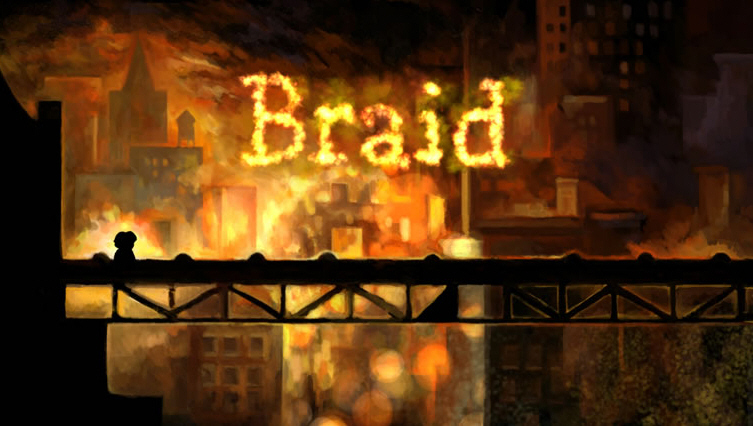
Roger Ebert made the video game media turn upside with protested rage when he put up a blog at the Sun Times website called "Video games can never be art." Ebert believes art is "the creation of one" and that group projects such as cathedrals or tribal dances all originate from one mind; one artist. It reminds me of how video games are created. There are many people working on a single video game at one time. But the original story, character concepts, and overall feel of the game usually come from one or a set few whose mind created the entire project in the first place. He takes games like Braid and Flower, which people often cite for the debate, and blows them off as if he just only watched the trailers. He only took small portions of the piece and criticized it. (It's obvious he didn't take the time to play Braid or he would have noted the importance of theme in gameplay. And don't get me started on his view of Flower.) Ebert is definitely entitled to his opinion but he should take a deeper look into the realm of video games before making such obviously hasty assumptions.


Those For:
Kellee Santiago, a game designer and producer for Thatgamecompany (creators of Flower, a game which was described by Game Informer magazine as "poetry"), defended video games as an art form during a presentation at USC. Santiago uses video games such as Waco Resurrection (an odd choice), Braid and Flower. While being a terrible game, Waco Resurrection was described by Santiago as being a certain person's representation of the events that occurred during the FBI siege of the Camp Davidian compound. David Koresh never summoned magical spells to fend off the officers. It was the developers artistic style and thought and it does follow Plato's definition of art. It's an imitation of nature or in this case history. She also uses Braid and Flower as examples which I will touch on later.

I disagree with her idea that video games are in the cave wall paintings era of art. I believe they are more advanced whereas the old-late-70's-early-80's-Atari-era of video games fit the lines of cave wall paintings. (The ancient cave painters, as Santiago says, were the great artists of their time.) She also says that no one has ever mentioned a video game that could be compared to the great poets, story-tellers or artists. This may be true but how many artists, poets, and writers today could be compared to the greats of the past?


Game Informer magazine presented a feature titled "The Great Debate" in which various members of their staff chose certain video games that they felt exemplified what it meant to actually be art and explained why. Adam Biessener said how Mass Effect 2's method of giving the player numerous ways to progress. He said giving players the opportunity to meddle with on-going genocides, war, and other moral issues while feeling the emotion of your endeavors and consequences is art. "The NPCs (non-playable characters) in Mass Effect 2 are collections of pixels, code, and audio recordings just as Saving Private Ryan is made of celluloid and Anna Karenina is born of ink and paper."

Matt Miller describes video games as "musical themes, visual images, and writing" which is how I define art. Miller uses Super Mario Bros. as an artistic synthesis between these elements blended into one experience. "Ultimately, Super Mario Bros. is an artistic experience because, like all good art, it affects one experiencing it emotionally and empirically."


The Exhibition:
I have selected a few examples of gaming art. Each of these games use some, if not all, types of artistic element to bridge an emotional gap between it and the audience.


Shadow of the Colossus is a massively empty game yet filled with perseverance, courage, strength, and love. You set out as a young man named Wander who is determined to revive a woman named Mono from an eternal rest. A disembodied entity named Dormin tells Wander that it can revive her only if he were to destroy sixteen colossi. The entire game is basically you fighting against these gigantic beings. You travel vast lands of green emptiness only stopping, not for a rest, but to slay these massive beasts. The art comes from the story and design. Wander must venture and endure battle with Colossus, that are comparable to skyscrapers in height, and continue to fight them with every succeeding Colossus being more difficult than the last. It's the story of David and Goliath with an intimate and affection twist.


Braid is about theme, interpretation, art and emotion. The premise seems simple enough; a Mario-like game where you platform across an odd world, solving puzzles, in hopes of rescuing a sweet princess from an evil knight. Each level has a theme and short anecdotes that shed light, not on the story, but on the psyche of the protagonist, Tim. The first level, Time and Forgiveness, begins with a book that explains that Tim is off to rescue the princess from an evil monster. This happened because Tim made many mistakes. This level introduces the power to reverse time, thus preventing any mistakes the player may have made that would lead to Tim's death. Braid is a perfect example of gameplay, literary themes and story melded together to tell a story of perception through art. (Video contains spoilers.)


Using nothing but the PS3's motion controls, you guide a single flower petal through grassy plains and city suburbs in order to preserve the beauty of nature in an ever growing industrialized world. The message, through metaphor in imagery, is not preaching how ugly industrialization destroys the beauty of nature but rather that true beauty is finding a balance between these two opposing forces.

metal gear solid 4 Pictures, Images and Photos


The art of Metal Gear comes from its portrayal of war and those involved in it. It's not just about mindless killing (you can play through the game without killing a single person), it's about the evolution of each character. Metal Gear started out as a simple stealth action game with the goal to thwart the plans of a terrorist from getting their hands on a weapon that could potentially destroy the world. The series ended in a way that makes you rethink every event in the series past. The evil terrorists you hated at the beginning of the series you will look at as war heroes and honorable patriots by the end. Each character is an epic all into themselves and there lies the art. The emotion that comes with the trailer alone is proof enough that Kojima is wrong and his brain child is gorgeous artwork.


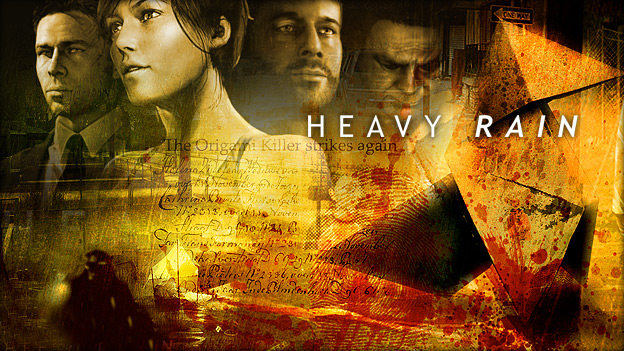
Imagine that your first born child was killed in a car accident. Despite it being an accident, the blame and neglect falls on your shoulders. Your wife divorces you and your youngest child hasn't the faintest of interest in being around you anymore. Then your youngest is kidnapped by an infamous serial killer who prays on children. The blame is once again on you. This is the premise of Heavy Rain. You play as the father of a kidnapped child, a former detective searching for the killer, an FBI agent prying for justice, and a journalist who just happens to be entangled in the entire matter. Each character searches and fights their way to the killer in their own way. However, what they are searching for and what they are fighting for varies from character to character. The choice is given to the player. Would you kill an innocent person to save your son? Would you risk the termination of your job to see that a killer is behind bars? Would you risk being raped to help a friend? In a way, each character is a different personality of the player. You choose what they will say and what they will do. That's the art of it all. A medium that allows you to place yourself in crisis and gives you the consequences of your actions in the form of cutscenes.

The Verdict:

Art is something that entices people's emotion. Art is anything musical, visual, or story driven that has a certain purpose. Video games combine all these. All I have to say to the art community: Video games do have a place as an art form. The definition of art varies from person to person and in the minds of those loyal to the games, it is art. If something is so strong emotionally as to bring you to tears with its story, in awe with its visuals, or in a trance with its music; yeah, that's art.


Sunday, April 15, 2012

Review: Alan Wake

Alan Wake

Playing a novel.

Developed by Remedy Entertainment
Published by Microsoft Game Studios
for the Xbox 360, Windows
Released May 18, 2010 (360), February 16, 2012 (PC)

As we inch closer to a future where the Resident Evil franchise has all but devolved into a cawadooty action shooter, the times beckon horror fanatics to look elsewhere for a good heart-pounding thrill. While PC gamers have enjoyed the likes of Amnesia: The Dark Descent and The Killing Floor, the horror library for consoles has been rather abysmal this generation. Ah, but behold, as you shine thine overpowered flashlight through the darkness, there reveals Alan Wake, a gleaming example of how to tell a horror story the right way.

Alan Wake is labeled as a Psychological Thriller, which in my opinion, is the best kind of horror. Just having an enemy jump out at you every few steps may make your heart skip a beat but it's still just a cheap scare. Now, remember that feeling you had as you looked up in the sky at the falling moon in Majora's Mask and knew the end was coming. Remember the eel in Super Mario 64, the Regenerators in Resident Evil 4, Earthbound (that entire freaking game?) and feeling a type of fear that felt more legitimate than having a skeleton popping out and saying boo? It's the subtlety and it's the constant ingraining of uncertainty, thrill and fear in the back of your head. It's this kind of psychological fear that Alan Wake creates so well. Alan Wake excels at telling an intriguing and thrilling tale that keeps the player's hands grasping the controller.

The story of the game tells of Alan Wake, a famous author of multiple best-selling novels, and his wife Alice, who decide to take a vacation in the remote mountain town of Bright Falls. After making their selves at home in their cabin in the middle of Cauldron Lake, darkness casts its presence over the island and takes Alice. Alan soon finds himself living through the events of a story he has not yet written in a search for his wife and in a fight against the all consuming Dark Presence.

The story and the game's overall presentation is its shining aspect. Alan Wake is split up into six chapters that are presented as episodes of a tv series with Wake himself as the narrator (recapping each episode with "Previously on Alan Wake"). The game did a great job of balancing the story telling and the gameplay; mostly placing cutscenes and the majority of the story during day scenes while giving the player back control during the nights when the feeling of vulnerability kicks in. Scenes of falling trees, and boats meld with the sounds of revving chainsaws, distorted voices, and a creepy yet brilliant score to create a gorgeously horrific atmosphere to immerse yourself in.

The environments are absolutely breathtaking. I often found myself gazing out across the mountains and lakes and admiring everything around while listening to some of the haunting tunes that they incorporated into the game such as Nick Cave's "Up Jumped the Devil", Among the Oak and Ashes' "Shady Grove" and even David Bowie's "Space Oddity".

While the gameplay isn't awful by any means, it is very limited and can be repetitive at times. The action consists of fighting the Taken who are drenched in darkness and must be bathed in the light of a flashlight or lantern in order to be made vulnerable to gunfire. The flashlight can simply be pointed at a Taken to gradually deteriorate their defense or focused on one using the left trigger to rapidly drain them of darkness. The only problem with this mechanic is that the left trigger is also used to aim your weapon so when I am focusing on taking out an enemy I find that my flashlight will unintentionally drain out of battery and I must wait to recharge it or use up a whole new battery if a new enemy comes along. The flashlight can be prevented from being used if the trigger is only slightly pressed but during intense moments there is no way I could keep myself from dying while carefully feathering the trigger to just the right pressure. The aimer is also very sensitive even when I have it toggled to the lowest possible sensitivity causing sporadic movements during tense situations.

If you think you can avoid combat by running away, think again, because every enemy runs much faster than you making escape futile. Luckily, though, dodging is quick and fluid. If an enemy is about to attack simply press the dash button and Alan will avoid the attack with a stylish visual which leaves you enough time to shine your light and take the upper hand. The game will also show you if an enemy spawns behind you by slowing down the action and zooming out to give you a better look at the playing field. The camera will also focus on certain puzzle elements which can be helpful, unless you're fighting enemies. During these moments, you will not be able to see yourself and during the confusion you can be easily taken out by a few hits. Beacause of this I had to make sure I killed every Taken before I moved on to any area.

I wouldn't have too much of a problem with the few flaws that the combat has if I had some variety in gameplay. Yes, puzzles are sprinkled here and there but they are so simple that they seemed non-existent. Driving sequences let you run over hoards of Taken as you throw caution to the wind. Too bad there's only about three driving sequences in the entire game.

Throughout the game there are coffee thermoses and manuscripts to pick up. The thermoses serve no purpose other than to collect but the manuscripts add more depth to the story and the game. The manuscripts come from the book that Alan is living out during the game. The manuscripts will give you a more in-depth look at an event that has already occurred or a person who have already met. They give you insight on enemies you are currently facing or puzzles your are about to solve. They will also tell you about future events so you are better prepared to face whatever it is. " . . . things were looking up. But then I heard the chainsaw." And sure enough, a huge psycho busts through a wooden gate and comes chasing me with a chainsaw. Sometimes, however, the manuscripts will spoil the story for you by telling you what happens at the end of a chapter before you're even halfway through it and if you're constantly reading the manuscripts there is no way to avoid it.

Alan Wake doesn't need gore or mere scare tactics to instill fear in the gamer. It gets into your head and places the fear in the back of your mind. Alan constantly states that no character especially the protagonist is safe and that there can be no happy ending. Fate is determined by the story as is the appeal of the game itself. Alan Wake is a horror novel disguised as a video game. While the gameplay is solid, there is no denying that the true selling point of Alan Wake is its psychologically thrilling tale.

RANK: C+

Fun: 3/5
Lasting Appeal: 2/3
Controls: 3/5
Graphics: 2 /2
Sound: 2/2